
OUR HISTORY
In The Beginning
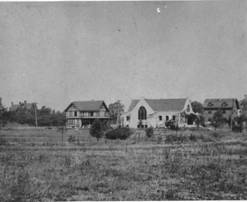
In the beginning, St. Paul's Evangelical Church was the outcome of a Sunday School conducted in the Longwood Station of the Chicago, Rock Island and Pacific Railway (now known as the Metra - Rock Island 95th Street Station) and a series of Sunday evening meetings at different homes for singing and prayer. Upon the suggestion of the Kenwood Evangelical Church, a meeting was called on May 5, 1893 to consider the formation of a neighborhood church, that would be non-denominational. On July 10th, 1893, the Constitution and Articles of Government were adopted and the Society was incorporated.
For a time, services continued to be held at the Rock Island station, and later in a tent in Howard Court, but soon a small wooded church 40 x 25 feet, was built at the corner of Howard Court and 94th Street, in which upon September 19, 1893, the church was formally organized by a council of representatives from Presbyterian, Congregational, Reformed Episcopal and Union Churches. There were at the beginning 39 members growing to 152 by January, 1910.
In 1902 and 1903, a stone church building, of moderate size, was erected on Winchester Avenue at the northwest corner of 94th Street. The cornerstone (one of three on the current building) was laid on September 21, 1902 and was signed by Reverend Clifford Snowden, the pastor of the church. The building was dedicated on March 1, 1903. Designed by Henry K. Holsman of Chicago, it was of low Gothic style with a center tower, had a seating capacity of 150 and cost approximately $6,000.00. The Sanctuary faced west (the present Sanctuary faces east). It had no center aisle, and instead had three sections of pews with aisles between them. The side sections were set on an angle toward front center of the Sanctuary.
During 1917 and 1918 the church building was remodeled and a new stone building, adjoining to the north, was erected for the Sunday School. The addition included a sizable room for large Sunday School gatherings and ran from the north side of the Sanctuary north to the north wall of the present Nursery. Since the room adjoined the Sanctuary, and was not completely walled off from it, when the movable partition was opened it would serve as extra seating for Worship Services. Classrooms, rooms for the church offices, and a kitchen were also part of this addition. A basement was excavated under the larger portion providing rooms for the organ motor and blower, a furnace room housing a new hot air heating plant, toilet facilities and a large Fellowship Hall. A new entrance on Winchester Avenue was also built at the location of the Tower, providing direct access to the new Sunday School area. On the second floor were more classrooms. In addition to the building itself, a new Austin pipe organ was installed, a special room having been built to house it. The total cost of this building and remodeling project was $36,294.93. Dedication of the building and organ was held during a special service on December 9, 1917.
In 1933 St. Paul's Evangelical Church changed its name to St. Paul's Union Church.
In 1938, $35,065.93 was raised to build another addition to St. Paul's. A new Narthex with new entrance, the church Parlor, Youth's Room and women's toilet facilities were added. An entrance with porch was built for access to this part of the building. Columns in the auditorium were removed, the furnaces and circulatory systems were remodeled to include two oil burners (a change from a coal fueled system) and a booster fan. The corner stone of the new addition (the second corner stone on the existing building is dated 1938.
For a time, services continued to be held at the Rock Island station, and later in a tent in Howard Court, but soon a small wooded church 40 x 25 feet, was built at the corner of Howard Court and 94th Street, in which upon September 19, 1893, the church was formally organized by a council of representatives from Presbyterian, Congregational, Reformed Episcopal and Union Churches. There were at the beginning 39 members growing to 152 by January, 1910.
In 1902 and 1903, a stone church building, of moderate size, was erected on Winchester Avenue at the northwest corner of 94th Street. The cornerstone (one of three on the current building) was laid on September 21, 1902 and was signed by Reverend Clifford Snowden, the pastor of the church. The building was dedicated on March 1, 1903. Designed by Henry K. Holsman of Chicago, it was of low Gothic style with a center tower, had a seating capacity of 150 and cost approximately $6,000.00. The Sanctuary faced west (the present Sanctuary faces east). It had no center aisle, and instead had three sections of pews with aisles between them. The side sections were set on an angle toward front center of the Sanctuary.
During 1917 and 1918 the church building was remodeled and a new stone building, adjoining to the north, was erected for the Sunday School. The addition included a sizable room for large Sunday School gatherings and ran from the north side of the Sanctuary north to the north wall of the present Nursery. Since the room adjoined the Sanctuary, and was not completely walled off from it, when the movable partition was opened it would serve as extra seating for Worship Services. Classrooms, rooms for the church offices, and a kitchen were also part of this addition. A basement was excavated under the larger portion providing rooms for the organ motor and blower, a furnace room housing a new hot air heating plant, toilet facilities and a large Fellowship Hall. A new entrance on Winchester Avenue was also built at the location of the Tower, providing direct access to the new Sunday School area. On the second floor were more classrooms. In addition to the building itself, a new Austin pipe organ was installed, a special room having been built to house it. The total cost of this building and remodeling project was $36,294.93. Dedication of the building and organ was held during a special service on December 9, 1917.
In 1933 St. Paul's Evangelical Church changed its name to St. Paul's Union Church.
In 1938, $35,065.93 was raised to build another addition to St. Paul's. A new Narthex with new entrance, the church Parlor, Youth's Room and women's toilet facilities were added. An entrance with porch was built for access to this part of the building. Columns in the auditorium were removed, the furnaces and circulatory systems were remodeled to include two oil burners (a change from a coal fueled system) and a booster fan. The corner stone of the new addition (the second corner stone on the existing building is dated 1938.
The Fire
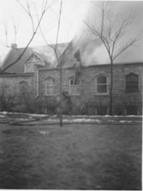
It is believed the previously mentioned new furnace system was responsible for the greatest tragedy to befall St. Paul's, for it is said to have been the caused by an overheated furnace.
"At 7:16 a.m. on Monday, February 9, 1942, Dr. William W. Illiffe (pastor of the congregation from December 1927 through January 1944) saw smoke coming from the church. The first alarm of the fire truck sounded soon thereafter. St. Paul's Union Church was afire. With all the fire apparatus that could be assembled, and the heroic efforts of many citizens of all faiths and creeds, little could be saved of the sanctuary. By noon it was a mass of smoldering ruins.
Hardly had the last blaze died out, when friends of the church volunteered to assist in re-building. The catastrophe stirred the community, St. Paul's must be re-built." (Taken from the St. Paul's Union Church Re-Building Fund Campaign brochure.)
Due to the generosity of the Chicago Board of Education the church was invited to hold services temporarily in Vanderpoel Grade School During this time over 400 boys and girls attended Sunday School every Sunday in Vanderpoel's various classrooms. The small Vanderpoel gymnasium was filled with church members who attended morning worship services. Other groups were taken in by other organizations and churches; many met in homes. The Youth Building of the church was not destroyed and it became the only center available for church activities.
"At 7:16 a.m. on Monday, February 9, 1942, Dr. William W. Illiffe (pastor of the congregation from December 1927 through January 1944) saw smoke coming from the church. The first alarm of the fire truck sounded soon thereafter. St. Paul's Union Church was afire. With all the fire apparatus that could be assembled, and the heroic efforts of many citizens of all faiths and creeds, little could be saved of the sanctuary. By noon it was a mass of smoldering ruins.
Hardly had the last blaze died out, when friends of the church volunteered to assist in re-building. The catastrophe stirred the community, St. Paul's must be re-built." (Taken from the St. Paul's Union Church Re-Building Fund Campaign brochure.)
Due to the generosity of the Chicago Board of Education the church was invited to hold services temporarily in Vanderpoel Grade School During this time over 400 boys and girls attended Sunday School every Sunday in Vanderpoel's various classrooms. The small Vanderpoel gymnasium was filled with church members who attended morning worship services. Other groups were taken in by other organizations and churches; many met in homes. The Youth Building of the church was not destroyed and it became the only center available for church activities.
Rebuilt
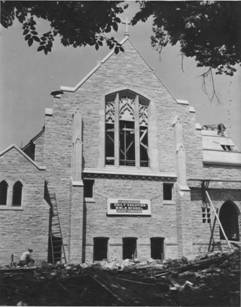
It took twenty-one months to rebuild the church, complicated by a second fire in December of 1942. Between the two fires the building was so completely gutted the stone church building that was erected in 1902 was entirely removed. The new building is about the same overall length and width and is located slightly west of the original building. The organ, which was installed in 1917, was ruined with the exception of the blower which is still in use today.
The Auditorium of the Sunday School building erected in 1917-18 was gutted and the building was badly damaged. The stone walls were repaired and underpinned allowing the lowering of the basement floor by approximately one foot. The first and second story rooms in the northeast corner were repaired for use as was the kitchen. The heating plant was destroyed except oil burners, blower and booster fan.
The new building was designed by Hugo C. Haeuser and was built at a cost of $150,000.00. The nave seats 380 on the main floor, 120 in the balcony, and when the windows at the rear of the nave are raised another 70 can be seated in the Narthex with full view of the chancel. Architecturally, the new building was done in the English Tudor Gothic style, faced with Lannon stone, blending and harmonizing with the north portion of the former building, which was not entirely destroyed and which had been rebuilt. The basement Scout Room/Fellowship Hall was connected to the kitchen (located on the first floor) by a dumb waiter. The old Tower now houses the pipe organ, which communicates by grilles with the Chancel. The organ itself is a rebuilt Moeller pipe organ, three manual, purchased with donations specifically collected for same and was dedicated as a tribute to Rev. and Mrs. Iliffe. The wording on the bronze tablet placed on the organ reads as follows: "Dedicated January 16, 1944 To the Glory of God And As a Tribute of Affection To Rev. William Wallace Iliffe, D.D. And his Wife Mrs. Frances Townsley Iliffe Who Ministered to St. Paul's Union Church, Chicago From 1927 to 1943. 'Whoso Offereth Praise Glorifieth Me' Psalm 50:23".
The Auditorium of the Sunday School building erected in 1917-18 was gutted and the building was badly damaged. The stone walls were repaired and underpinned allowing the lowering of the basement floor by approximately one foot. The first and second story rooms in the northeast corner were repaired for use as was the kitchen. The heating plant was destroyed except oil burners, blower and booster fan.
The new building was designed by Hugo C. Haeuser and was built at a cost of $150,000.00. The nave seats 380 on the main floor, 120 in the balcony, and when the windows at the rear of the nave are raised another 70 can be seated in the Narthex with full view of the chancel. Architecturally, the new building was done in the English Tudor Gothic style, faced with Lannon stone, blending and harmonizing with the north portion of the former building, which was not entirely destroyed and which had been rebuilt. The basement Scout Room/Fellowship Hall was connected to the kitchen (located on the first floor) by a dumb waiter. The old Tower now houses the pipe organ, which communicates by grilles with the Chancel. The organ itself is a rebuilt Moeller pipe organ, three manual, purchased with donations specifically collected for same and was dedicated as a tribute to Rev. and Mrs. Iliffe. The wording on the bronze tablet placed on the organ reads as follows: "Dedicated January 16, 1944 To the Glory of God And As a Tribute of Affection To Rev. William Wallace Iliffe, D.D. And his Wife Mrs. Frances Townsley Iliffe Who Ministered to St. Paul's Union Church, Chicago From 1927 to 1943. 'Whoso Offereth Praise Glorifieth Me' Psalm 50:23".
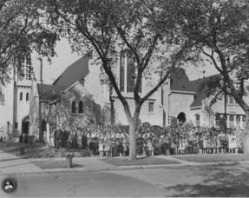
The fact that such an extensive rebuilding project was undertaken during World War II, when building materials were extremely scarce due to rationing of "critical" materials such as steel, caused the builders to make use of other materials, using wood for most of the main structure of the church. However, the U.S. Government recognized the important part the church had in maintaining civilian moral, and vitalizing the spiritual lives of the community, did grant priority on a limited amount of "critical" material.
The new church was dedicated on Sunday, January 16, 1944. On that day, Rev. Dr. Iliffe retired, having delayed his retirement in order to guide St. Paul's through its rebuilding.
The 60th Anniversary of St. Paul's, which was celebrated on Sunday, September 20, 1953, was highlighted by the presentation of a plaque dedicated to the 39 Charter Members. Today the plaque hangs in the Church Library.
The new church was dedicated on Sunday, January 16, 1944. On that day, Rev. Dr. Iliffe retired, having delayed his retirement in order to guide St. Paul's through its rebuilding.
The 60th Anniversary of St. Paul's, which was celebrated on Sunday, September 20, 1953, was highlighted by the presentation of a plaque dedicated to the 39 Charter Members. Today the plaque hangs in the Church Library.
The "New" Addition
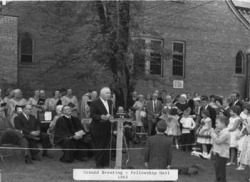
In the early spring of 1962 ground was broken for yet another major addition to St. Paul's. This addition includes our Pastors Study, offices for the secretary and Director of Christian Education connected by a shared storage/copy room, new toilet facilities with a lounge area for the ladies, and access to the Sanctuary Narthex along the south end. Also the main entrance to the new part of the building is on 94th Street with an area for coats and greetings. Along the north end of the new building is the kitchen, divisible classrooms with a fireplace at the west end, known as the Fireside room, and the main entrance to the old building. The main part of this addition is the center portion: a large Fellowship Hall complete with stage at the east end and Choir Room to the west. The seating capacity of this Hall is 175 for meetings and 120 for dining, with another 30 in the Choir Room. The entire new building is air conditioned, with separate units installed in the offices due to their greater length of daily occupancy. Some remodeling of the old building, in order to integrate the two, was also required. The old office and Pastor's Study were converted into one larger room now serving as the Church Library, with access to the Sanctuary Narthex. The Sanctuary was given a new heating and air conditioning system and the stained glass windows at the rear of the Narthex were fitted with light boxes behind to allow continued enjoyment of their beauty since they were now on an inside wall. The old kitchen was converted into an Infant Nursery. The total cost for he addition and remodeling was $205,000.00. Dedication of the new building was held with a special Key Ceremony on Sunday, May 5, 1963 - the same day, 70 years later, of the first formal meeting determining that a neighborhood church would be formed in Beverly Hills.
Name Change
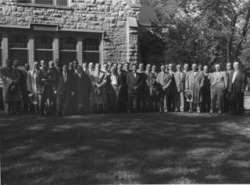
In 1991, St. Paul's Union Church changed its name to St. Paul's Bible Church. St. Paul's is the outgrowth of the fundamental religious spirit and has for over 100 years illustrated the Christian fellowship of evangelical denominations carrying on the service of a Christian church without hindrance from doctrinal differences. Today, St. Paul's Bible Church still stands strong on the Word of God. We hold dear our proud tradition, cherish the memories contained in these walls, revere those who have gone before us in strength for the Lord, and eagerly anticipate a long, vibrant future as a "Christ-Centered Community Church". We praise God for his many blessings and pray for His continued guiding hand.